3-4-3 · 3-5-2 · a back five without the ball
Three at the back, explained
A back three is three centre-backs with a wing-back on each side, usually as a 3-4-3 or a 3-5-2. With the ball it puts five across the front, one in each lane. Without it the wing-backs drop and it defends as a back five, neighbours about 12 m apart. It gives a spare centre-back; it costs a man in midfield.
 Total Football StudioPausedThe back three01 / 04
4 phases, one film
- Between neighbours in the back five
- About 12 m
- Wing-back to centre-back
- 12 m
- Phases on the board
- 4
Measured on the board, on a 105 x 68 m pitch. A coaching guide from The Back-Three Playbook, not a law: adjust it to your players and your pitch.
Phase by phase
The Back three, as the board plays it.
-
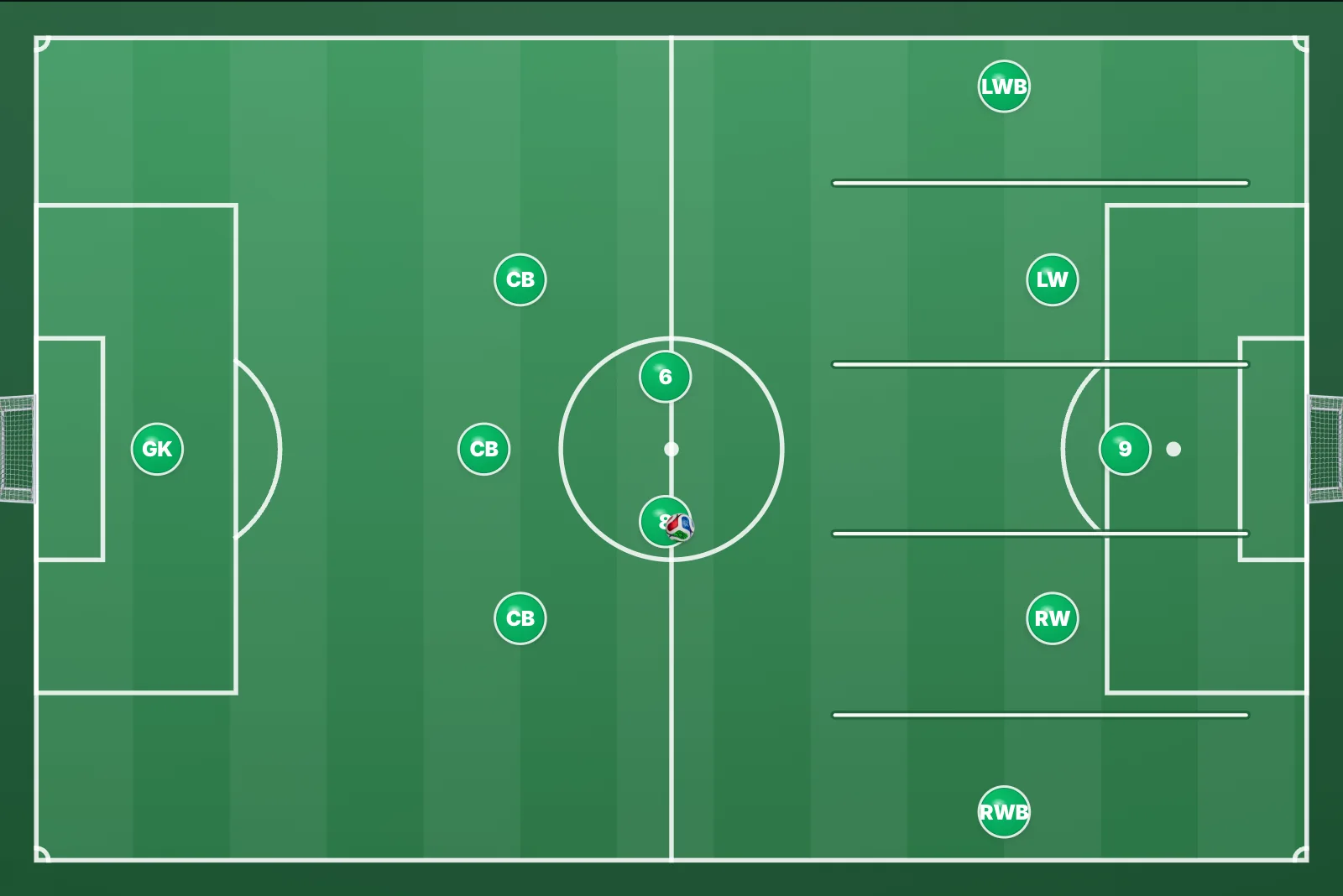 01
Five across the front
Three behind, two in midfield, and five on the last line, one in each lane.
Five lanes run the length of every pitch. With the ball the back three puts one man in each in the opponent's half: the two wing-backs wide, the forwards inside. Three centre-backs and two midfielders stay behind to play out and to stop the counter.
-
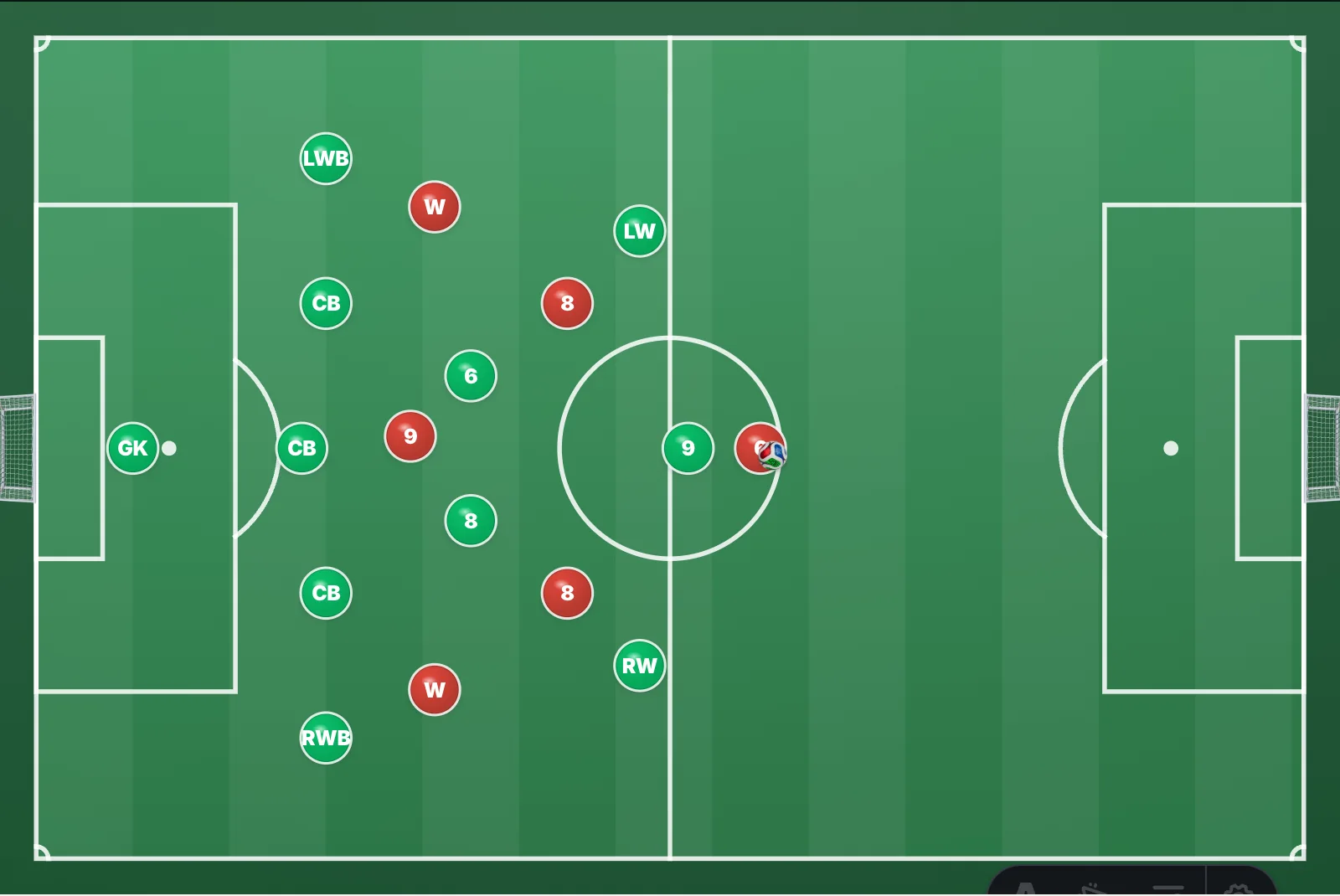 02
Without the ball: a back five
The wing-backs drop level. Neighbours about 12 m apart, so both can reach a pass between them.
The wing-backs drop level and the back three becomes a back five. Two neighbours about 12 m apart are each 6 m from the middle of the gap, so both can reach a pass through it. The middle man stands a few metres behind, never flat.
-
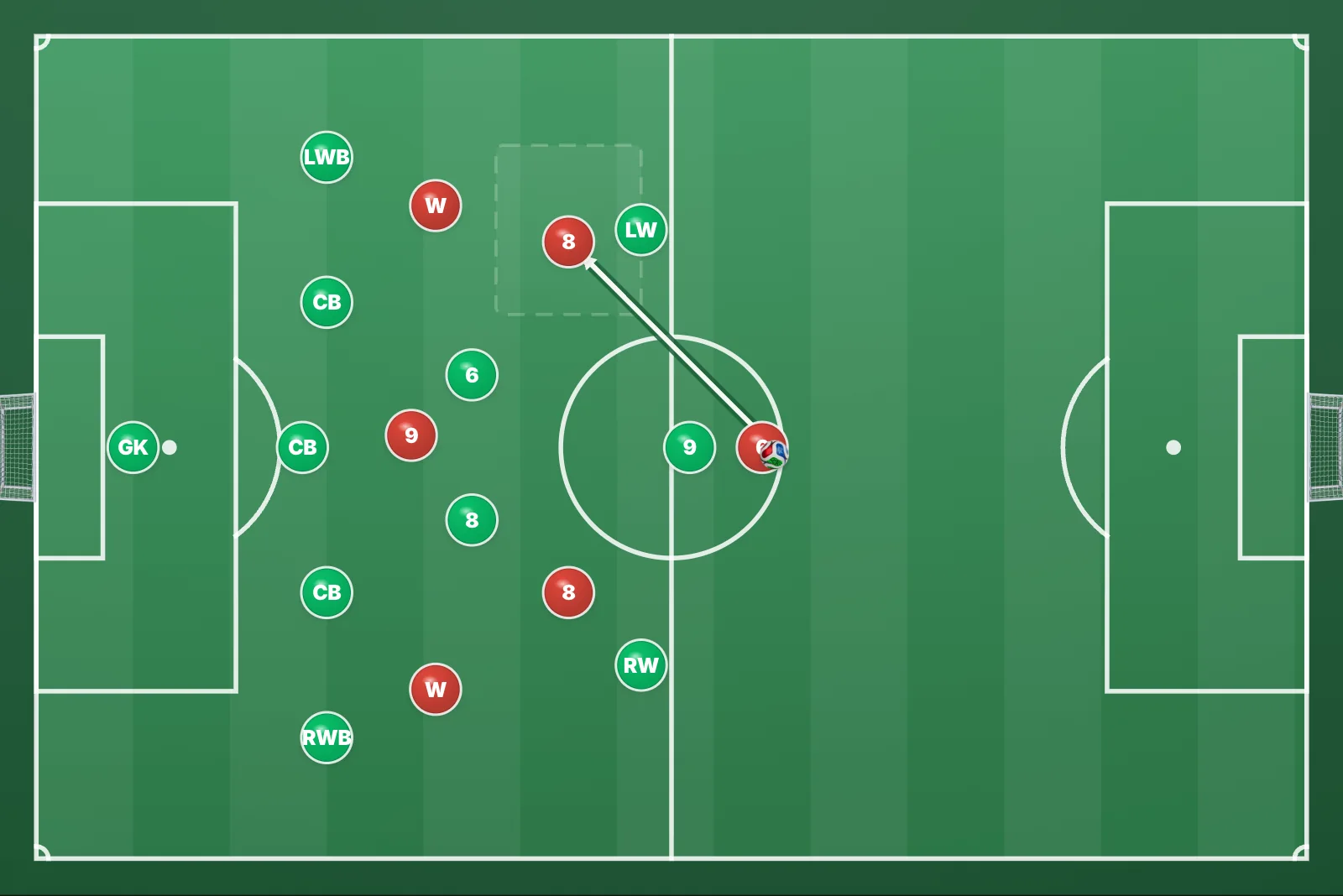 03
Two against three in midfield
Against a 4-3-3 their midfield three outnumber our two, and an 8 finds the half-space.
Against a 4-3-3 the back five is five against three, but the midfield is two against three. Their 8 drifts into the half-space beside our two midfielders, and nobody in front of the back line is free to take him.
-
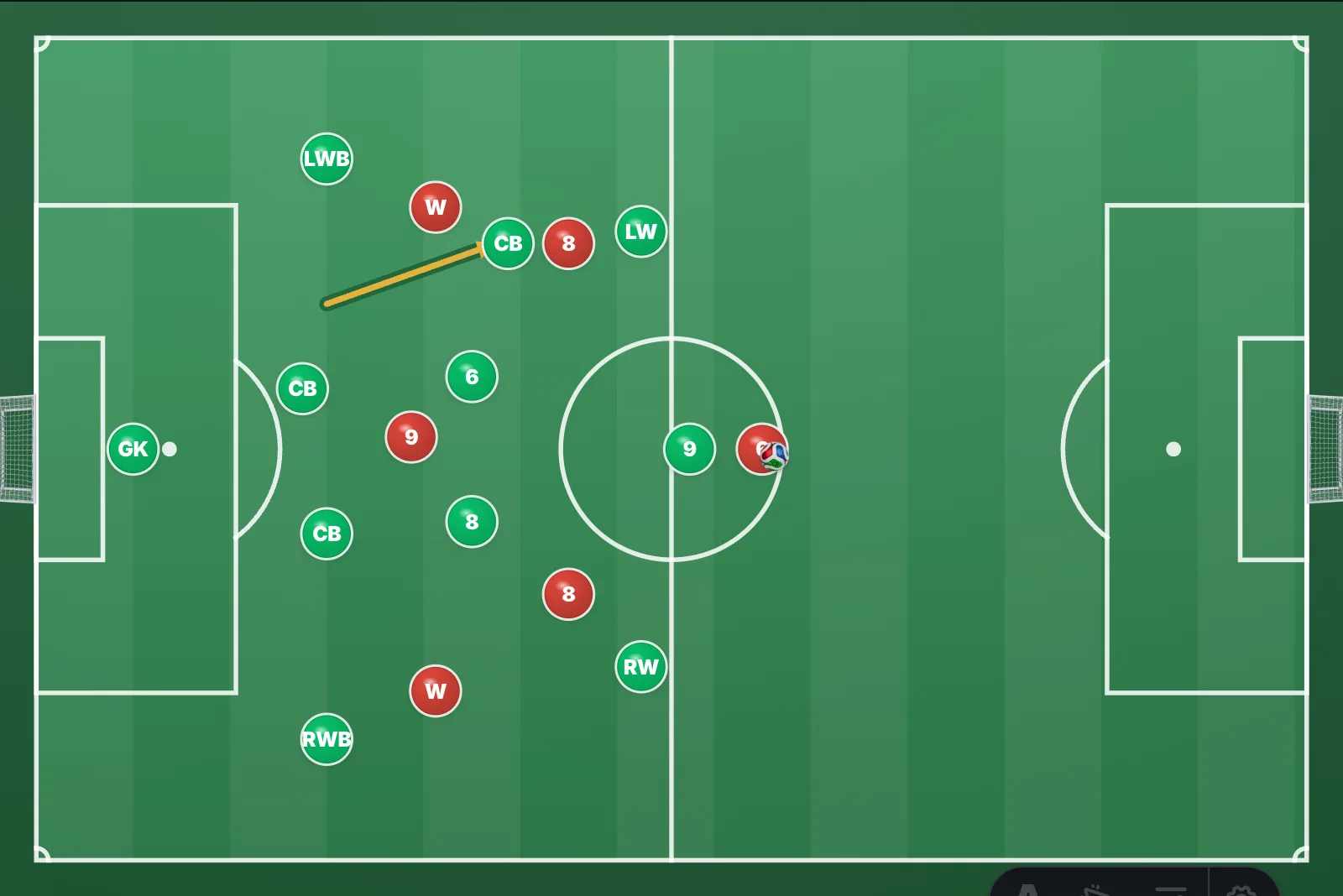 04
The fix: an outside centre-back steps in
Five at the back against a front three leaves one spare. He steps out to their 8; the others slide.
Five against a front three leaves one spare. An outside centre-back steps out to their 8 and the other four slide across. It is the reason to play three at the back: a spare defender without taking a man out of midfield.
The roles
Who does what in a Back three.
- The middle centre-back
- Covers and talks: the man a few metres behind, who tells the line when to step and when to drop.
- Outside centre-backs
- Two jobs: defend, and build. Step into midfield when they are spare.
- Wing-backs
- The width of the team, a whole touchline in both directions, all game.
- Central midfielders
- Two or three: play out in front of the back three, and screen it without the ball.
- Forwards
- In a 3-4-3, three across the front; in a 3-5-2, two strikers with a midfield of five behind.
What it gives you
- A spare centre-back against one or two strikers, without taking a player out of midfield.
- Width from the wing-backs, so the forwards can play inside.
- Three plus two to play out from the back.
- Five across the front in their half, and a back five without the ball.
Where it is weak, and the fix
-
One fewer in midfield
Fix An outside centre-back steps into midfield, or the wing-backs get forward.
-
The wing-backs run all game
Fix Pick players who can run it both ways: it is the whole job, not an extra.
-
Space behind a wing-back
Fix The outside centre-back covers when the ball is lost high.
-
A wasted man against a lone striker
Fix The spare centre-back steps into midfield.
Playing against it
How to beat a Back three.
- 1 Play with a midfield three: two against three in the middle is where a back three loses.
- 2 Counter into the space behind a wing-back who has gone high.
- 3 Play with one striker, so one of their three centre-backs has nobody to mark.
- 4 Make the wing-backs defend and attack the whole touchline, over and over.
The whole system, in a book
The Back-Three Playbook
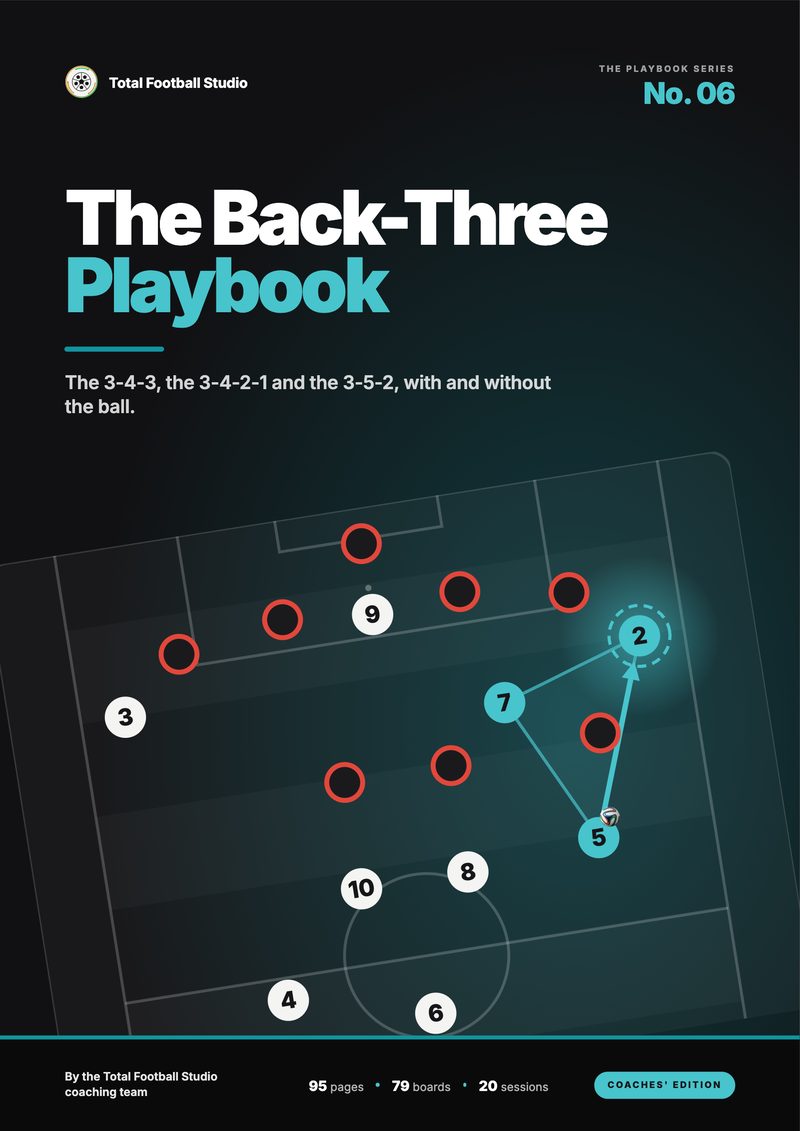
A back three is not one more defender. It is a shape that turns into a five without the ball and a five across the front with it. This playbook shows every job in it: the middle centre-back who runs the line, the outside centre-back who steps out, the wing-back who covers a whole touchline, the midfield and the two 10s, playing out, the final third, defending as a five and pressing. Every board is drawn to scale and checked.
Asked about the Back three
The next questions.
Is a back three the same as a back five?
It is the same eleven in two phases. With the ball the wing-backs push on and three centre-backs stay; without it the wing-backs drop level and there are five across the back.
What is the difference between a 3-4-3 and a 3-5-2?
The front. A 3-4-3 has two central midfielders and three forwards; a 3-5-2 has five in midfield, three of them central, and two strikers. Without the ball the 3-5-2 defends as a 5-3-2.
How far apart should three centre-backs be?
As a coaching guide, about 12 m between neighbours when defending: each is then 6 m from the middle of the gap and both can reach a pass through it. On a narrow pitch, close it to 10 m.
How does a back three play against a 4-3-3?
At the back it is five against three, so one outside centre-back is spare and can step into midfield. In the middle it is two against three, which is the matchup to fix.
Other formations
-
Back four · midfield three · front three
The 4-3-3 formation, explained
-
Four lines · two holders · one 10
The 4-2-3-1 formation, explained
-
Two banks of four · two up front
The 4-4-2 formation, explained
In the library