Back four · midfield three · front three
The 4-3-3 formation, explained
A 4-3-3 is a back four, a midfield three with one holder (the 6) and two 8s, and a front three. Its strength is geometry: before anyone moves it forms three triangles, so every player has two passing angles. Without the ball it becomes a 4-1-4-1, about 34 m from the back line to the 9. Its weak spot is the space beside the single 6.
 Total Football StudioPausedThe 4-3-301 / 05
5 phases, one film
- Back line to the 9, without the ball
- 34 m
- Phases on the board
- 5
Measured on the board, on a 105 x 68 m pitch. A coaching guide from The 4-3-3 Playbook, not a law: adjust it to your players and your pitch.
Phase by phase
The 4-3-3, as the board plays it.
-
 01
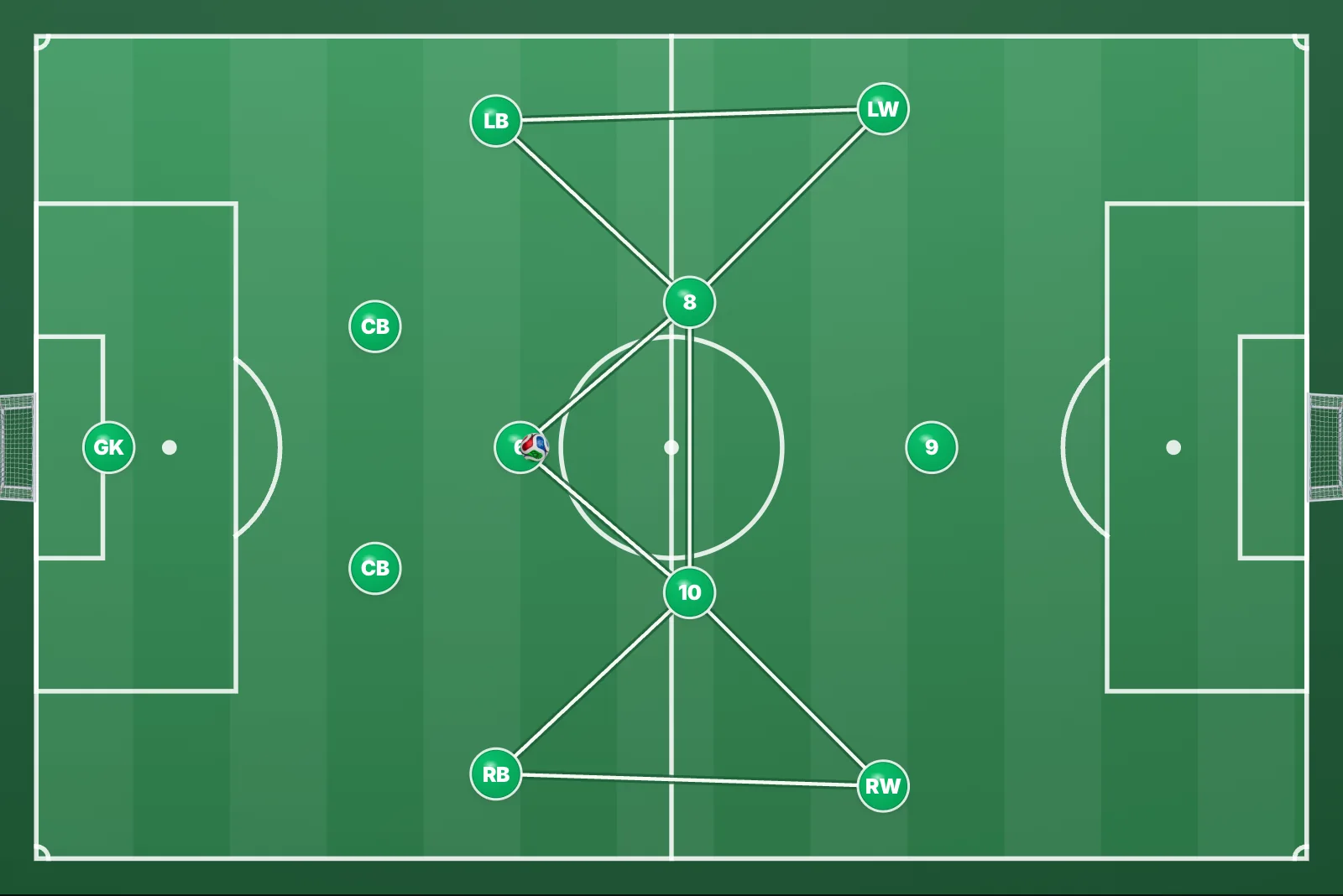
Three triangles
Two wide triangles and one in the middle. Every man has two passing angles.
Two wide triangles (full-back, 8, winger) and a central one (6, 8, 10). Nobody has to move for the ball to have two ways out of every zone. That is why the 4-3-3 is called a starting point you move from, not a formation you line up in.
-
 02
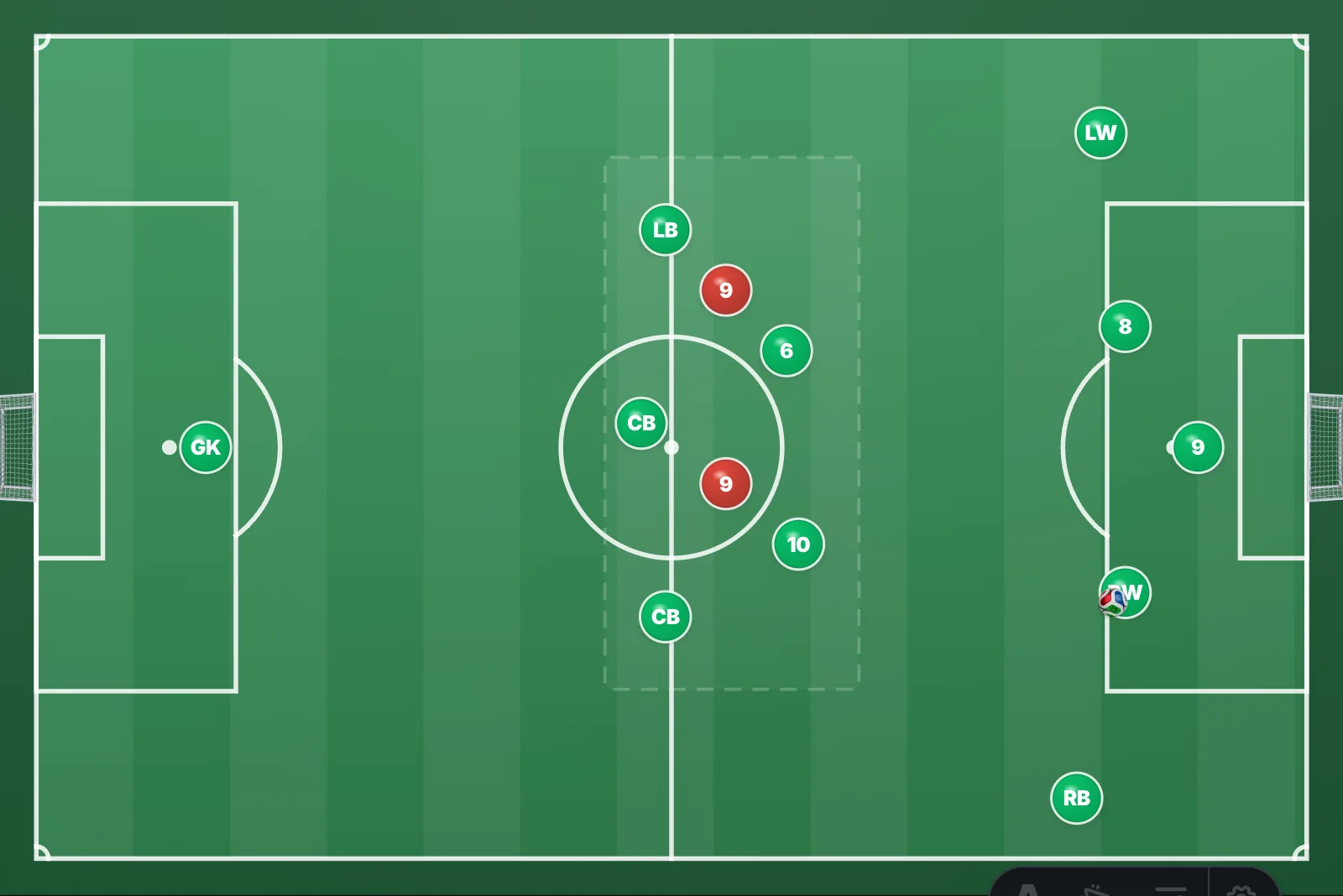
Five up, 3+2 behind
Five men attack the five lanes. Three at the back and two in front stay for the counter.
The team attacks with five men across the five lanes and defends the counter while it is still attacking: three at the back and two in front of them, set before the attack ends. Their two forwards meet five players. The rule is their forwards plus one, at least.
-
 03
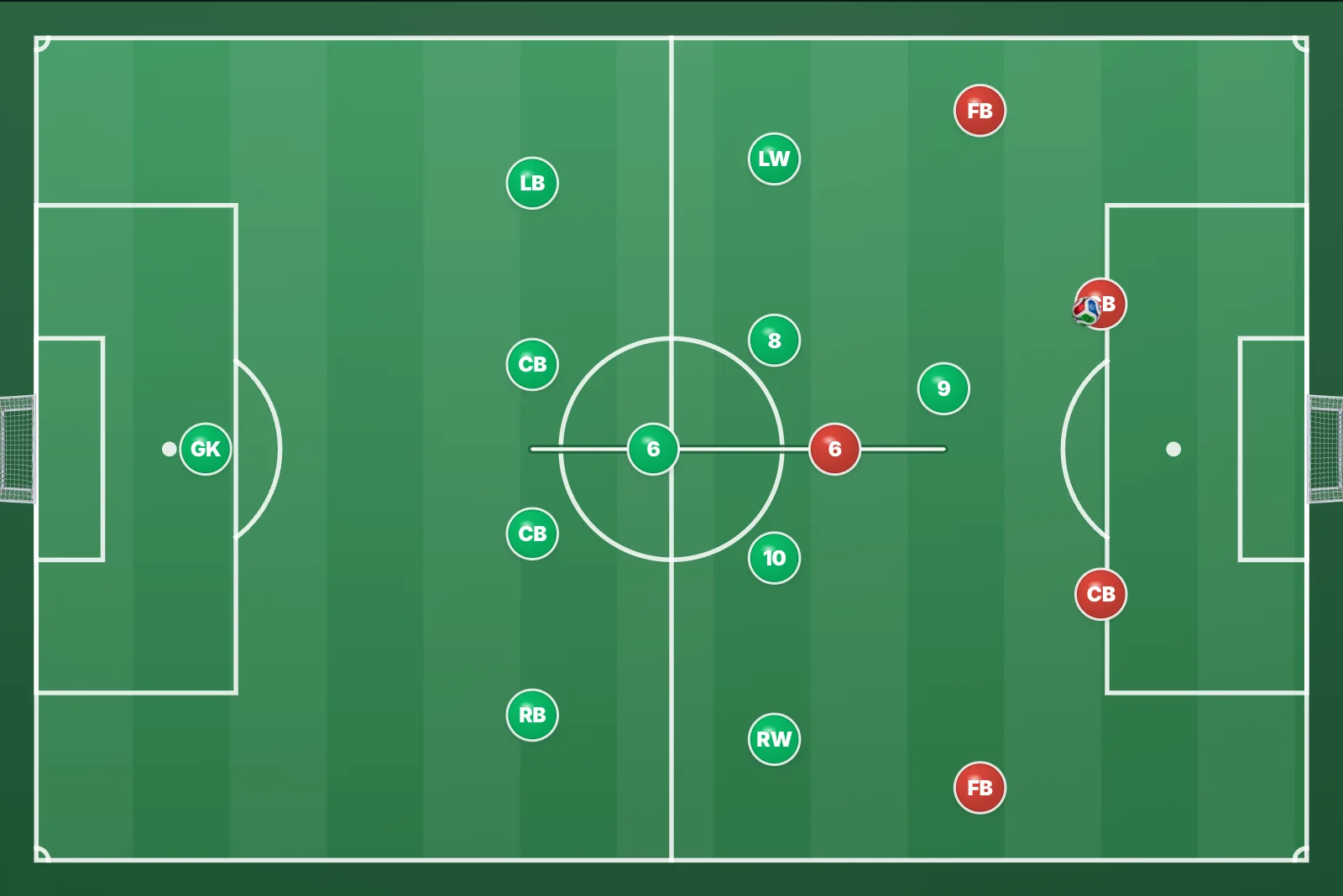
Without the ball: 4-1-4-1
The wingers drop into the midfield line. The 9 stands between the ball and their 6.
Without the ball the wingers drop into the midfield line and the shape is a 4-1-4-1, about 34 m from the back line to the 9. The 9 stands on the line between the ball and their 6, so the pass into the middle is closed before it is played.
-
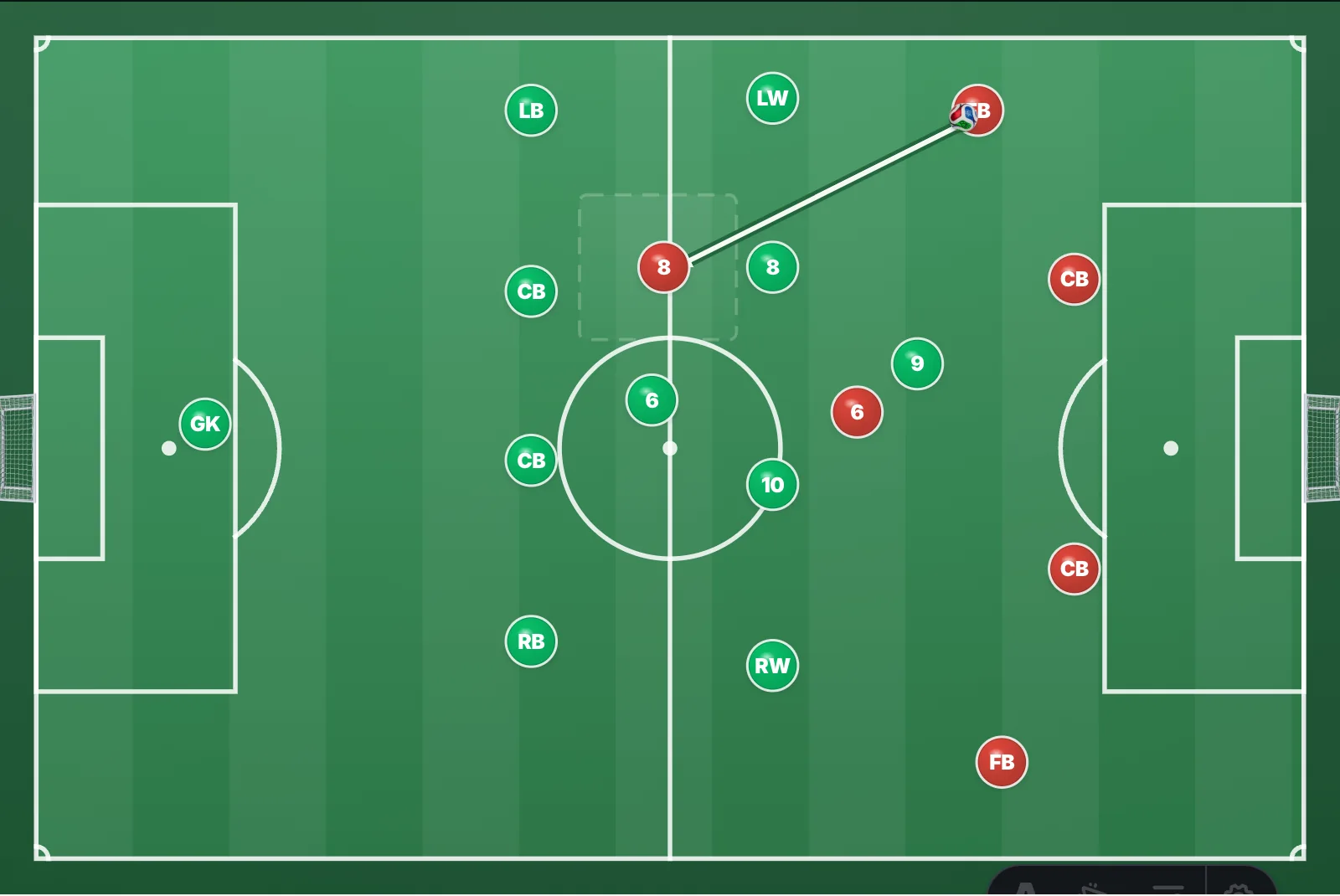 04
The weak spot: beside the 6
One holder cannot cover the width. Their 8 drops into the space beside him.
One holder cannot cover the width of the pitch. When the ball goes wide, the space either side of the 6 is open, and a midfielder who drops into it can turn and face our back four.
-
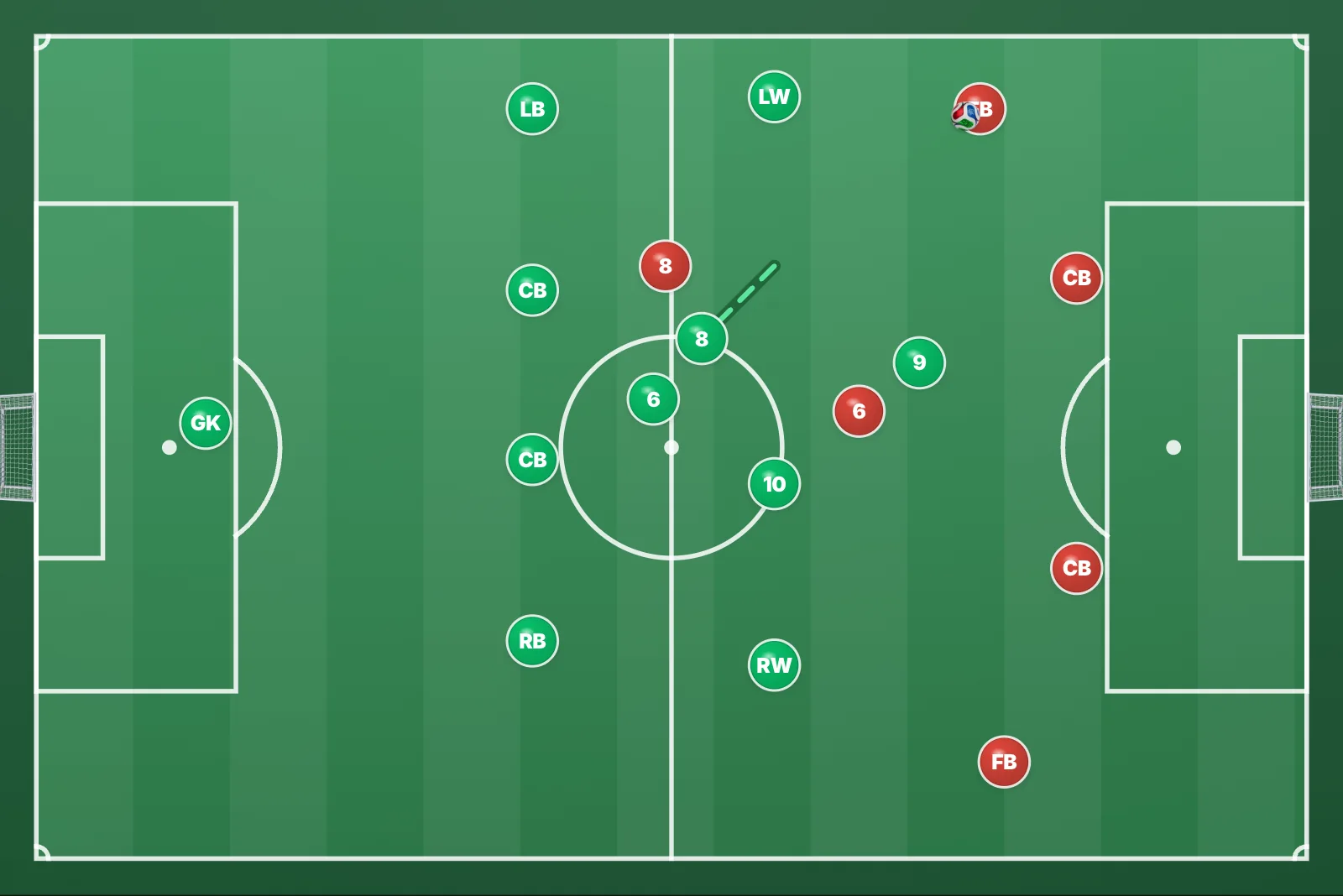 05
The fix: an 8 drops in turn
The near 8 drops next to the 6. For as long as the ball is there, two holders.
The near 8 drops next to the 6 while the ball is on his side, so for that moment the team has two holders. When the ball goes back inside he steps up again. The other fix is to start in a double pivot.
The roles
Who does what in a 4-3-3.
- Goalkeeper
- The extra man in the build-up. Makes three against two against a two-man press, and plays over it when the press commits.
- Centre-backs
- Split wide to start play, carry the ball into midfield when nobody presses them, defend the depth behind a high line.
- Full-backs
- The shape shifters: either the width of the team or an extra midfielder inside. What they do decides the system in possession.
- The 6
- The axis. Receives between the centre-backs and their forwards, switches play, and screens the centre-backs when the ball is lost.
- The 8s
- Live in the half-spaces, receive between the lines, run beyond the 9, and step up to turn the 4-5-1 into a 4-4-2 press.
- Wingers
- Pin the opposing full-backs, give width or attack inside, and start the press from the outside.
- The 9
- Pins both centre-backs and finishes, or drops as a false nine. Without the ball, a curved run cuts the pitch in half.
What it gives you
- Triangles everywhere before anyone moves: two passing angles for every player.
- Three against two in central midfield against a 4-4-2, with the 6 free behind their two forwards.
- A front three that pins a back four and starts the press from the outside.
- Five lanes to attack, with a 3+2 left behind for the counter.
Where it is weak, and the fix
-
Space beside the 6
Fix The 8s drop in turn, or play a double pivot.
-
Behind the full-backs
Fix Set the rest defence before the attack ends.
-
An isolated 9
Fix The 8s arrive in the box.
-
A press that gets played through
Fix Three forwards against four or five builders: pick a side to press and use curved runs.
Playing against it
How to beat a 4-3-3.
- 1 Put a man in the space beside their 6. A 10 or a dropping forward there makes him choose.
- 2 Counter behind their full-backs before the rest defence is set.
- 3 Build with one more than their front three. A back three, or a 6 dropping in, leaves a man free.
- 4 Against a 3-5-2 or 3-4-3 the 4-3-3 is outnumbered in midfield, five against three.
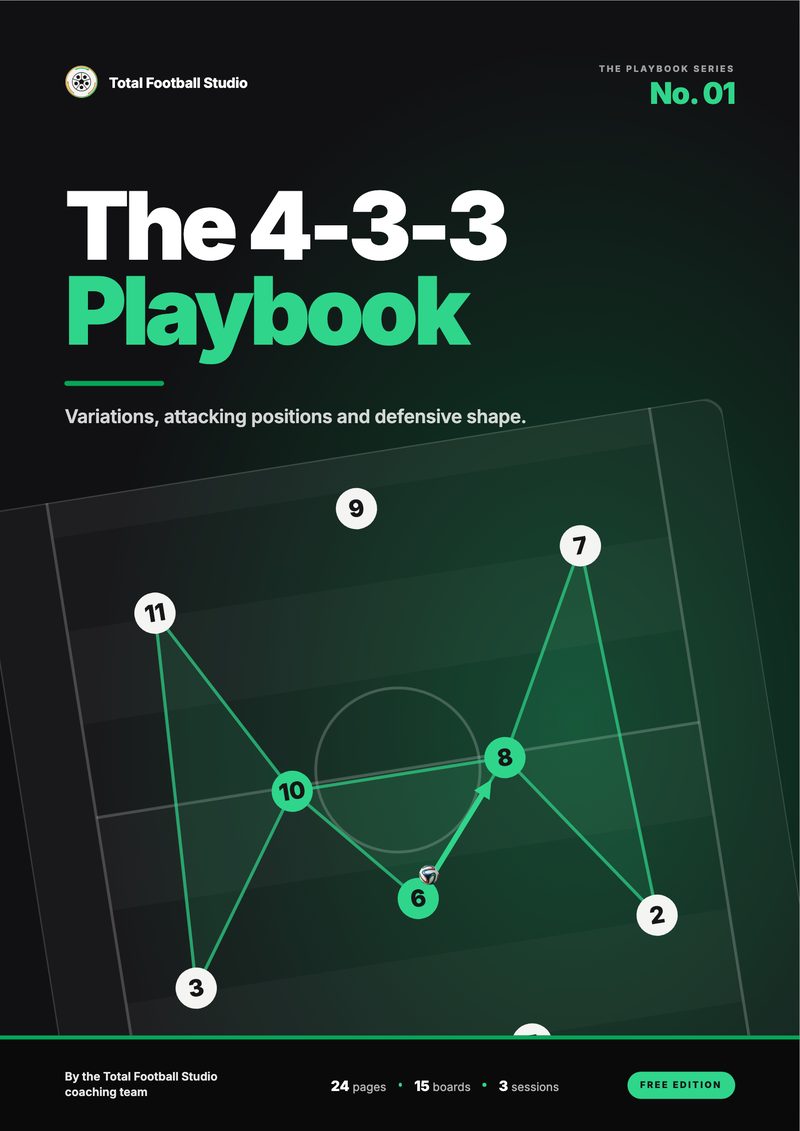
The whole system, in a book
The 4-3-3 Playbook
A field guide to the 4-3-3 for coaches and analysts: how the system is built, how it changes shape with and without the ball, and how to coach every phase of it. Every shape is drawn to scale on a real pitch.
Asked about the 4-3-3
The next questions.
Is the 4-3-3 an attacking or a defensive formation?
Both, which is why it is so common. With the ball it can attack with five across the front and three plus two behind. Without it the wingers drop and it defends as a 4-1-4-1 or 4-5-1, and most of any match is defended in that mid block.
What is the difference between a 4-3-3 and a 4-2-3-1?
The midfield. A 4-3-3 has one holder and two 8s; a 4-2-3-1 has two holders and one 10. The 4-3-3 has more players arriving in the box, the 4-2-3-1 more cover in front of the back four.
What does the 6 do in a 4-3-3?
He is the axis of the team. He receives between the centre-backs and the opposing forwards, switches the play, and screens the centre-backs the moment the ball is lost. Without the ball the 9 protects him by standing between the ball and their 6.
How does a 4-3-3 play against a 4-4-2?
It wins the middle three against two, with the 6 free behind their two forwards. It is exposed to two forwards against two centre-backs in transition and to the space either side of the 6, so it builds with three at the back and drops an 8 when defending.
Other formations
-
Four lines · two holders · one 10
The 4-2-3-1 formation, explained
-
Two banks of four · two up front
The 4-4-2 formation, explained
-
3-4-3 · 3-5-2 · a back five without the ball
Three at the back, explained
In the library