The Christmas Tree Formation (4-3-2-1), Explained
Four, then three, then two, then one: each line narrower than the one below it. That is the shape, and it is also the weakness.
The Christmas tree formation is the 4-3-2-1: a back four, three central midfielders, two attacking players just behind one striker. Drawn from your own goal upwards, every line is shorter and narrower than the line below it, so the ten outfield players make the outline of a tree, and the striker is the star on top.
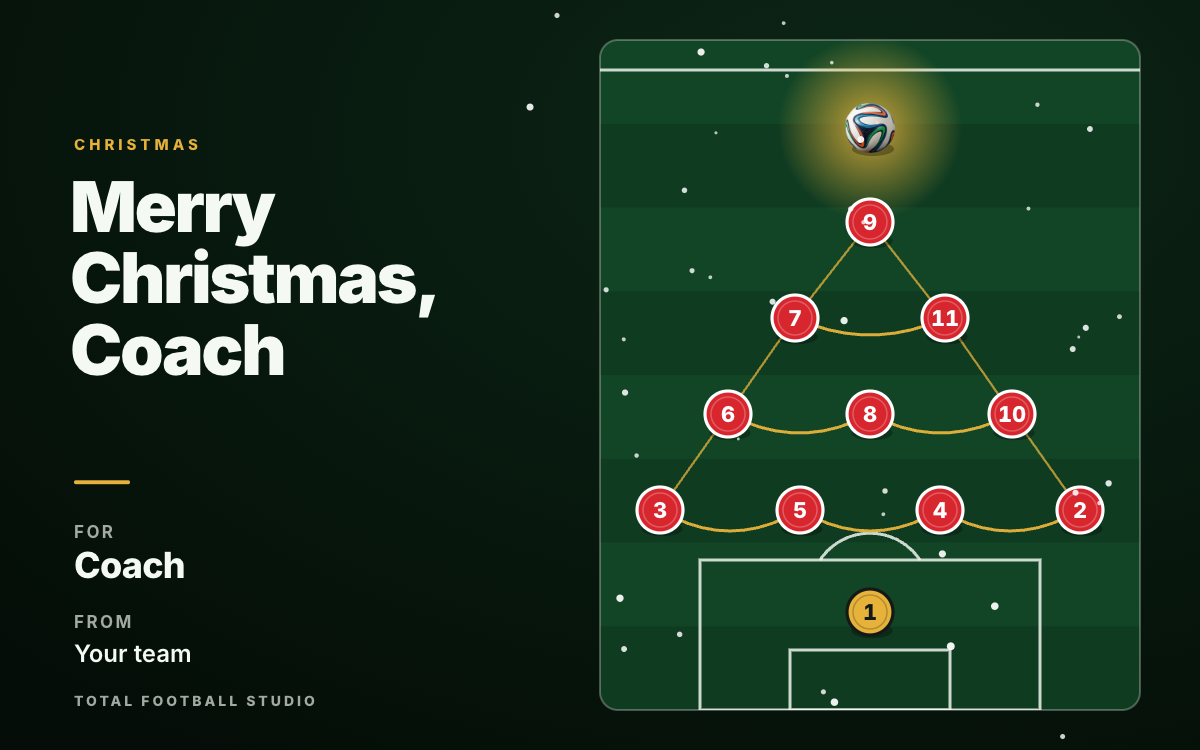
The base: a back four
The bottom of the tree is an ordinary back four, and it defends the way any back four does: as one connected unit, not as four individuals. One defender presses the ball, the nearest covers behind him on a diagonal, and the far side tucks in to balance the shape. Nothing about the shape above changes that job.
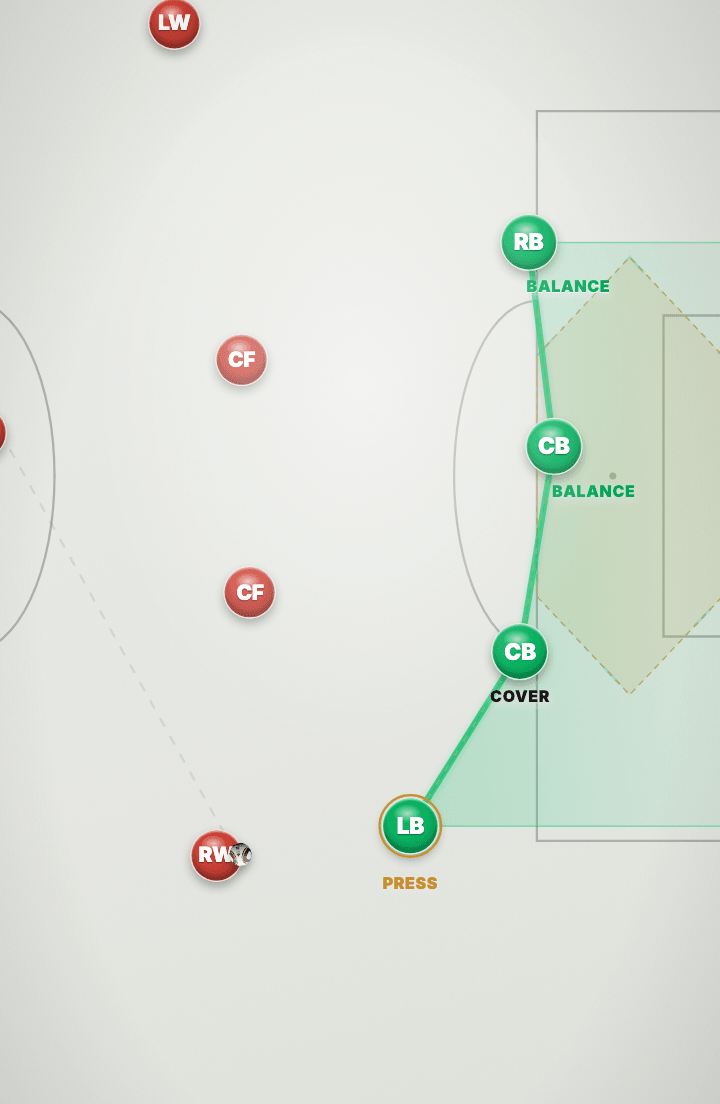
Three in the middle, two behind the nine
Above the back four stand three central midfielders, then two players between the midfield and the striker. What the tree does not have is a wide midfielder. Every player above the back four stands inside, so in midfield the width belongs to nobody but the full-backs.
Each line narrower than the one below it. That is the shape, and the weakness.
Where it is weak: the far touchline
A narrow shape is a decision you can punish, and the clearest board of it in our library is the diamond: four midfielders inside a fraction of the pitch’s width, beaten by a switch to the far touchline, because the shape has to travel the full width itself and the ball travels faster than the men.
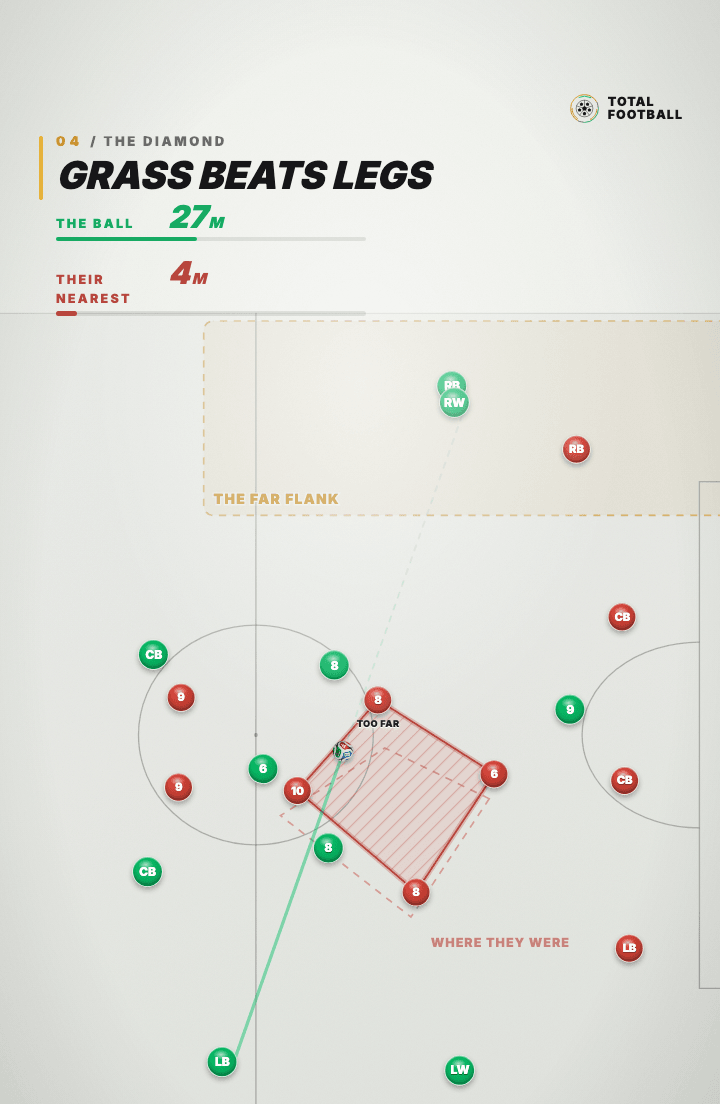
So the question a 4-3-2-1 has to answer, in every session that works on it, is who goes to the far touchline when the ball does. With no wide midfielder, the answer is a full-back, or one of the three shuttling out, and either way someone leaves a space behind.
Against a 4-4-2
A 4-4-2 puts two banks of four across the pitch, with wide midfielders on both flanks. The Christmas tree trades those two wide men for the two players behind the striker: more bodies between the lines, fewer on the outside. Which trade is right depends on where the opponent wants to play.
On the board The 4-4-2 Mid-Block Two banks of four, and the fourteen metres between them 6 phases →Draw it yourself
Pose the 4-3-2-1 on a board, then move the ball to the far touchline and see who has to go. That one phase is the whole conversation about this shape.
In the Studio Draw the 4-3-2-1 and play it Open Total Football Studio in your browser, free. Open Studio →The same tree is also our Christmas card for coaches: Christmas gifts for football coaches.
Drawn from
Every claim above is on one of these boards.
Nothing in this post teaches something the diagrams do not show. That is a rule, not a coincidence: the article is written from the systems, never the other way round.
The notebook
One system, explained, every week.
The diagram, the principle, and the detail most people miss. Unsubscribe in one click.
Follow along
Watch the systems move.
Short tactics reels, every frame drawn, no broadcast clips. Follow along wherever you scroll.
Read next
Narrow is not compact
Two words used as if they mean the same thing. One of them is a strength you build. The other is a weakness you can punish.
The extra man
Build-up is arithmetic before it is technique. Two ways to make three against two, and what the pressing team does about it.
One presses, three solve
Watch a back four for one phase and you see four defenders. Watch it for six and you see four jobs being handed down a line.